
 EN




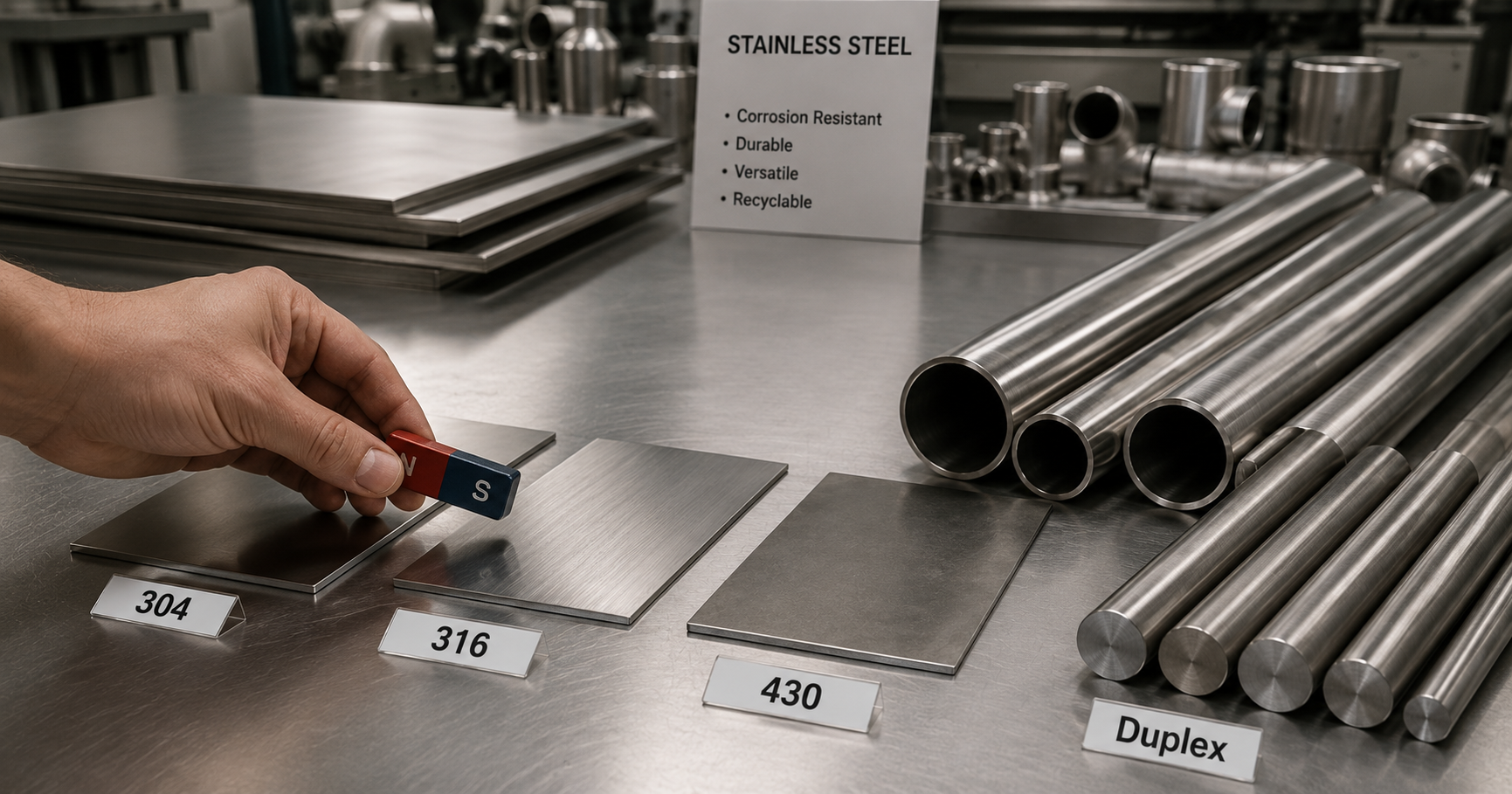
Is Stainless Steel Magnetic? 304, 316, 430 & Duplex Explained
Some stainless steels are magnetic, while others show little attraction in the annealed condition. The answer depends on the stainless steel family and its processing condition. A magnet alone cannot identify a grade.
Is Stainless Steel Magnetic? Compare 304, 316, 430 and Duplex
The table separates the usual magnetic response from grade identification. It is a practical guide to what a buyer may observe, not a pass/fail specification for magnetic permeability.
| Grade / family | Usual magnetic response | Condition to check |
|---|---|---|
| 304 / austenitic | Little attraction when annealed; cold working can increase attraction. | Whether the item has been bent, drawn or otherwise cold worked. |
| 316 / austenitic | Little attraction when annealed; a response after cold working is possible. | Product condition; do not assume every 316 item will give the same result. |
| 430 / ferritic | Normally magnetic, including in the annealed condition. | Magnetic attraction is expected but does not prove the exact grade. |
| Duplex / austenite and ferrite | Normally magnetic because the structure includes ferrite. | Exact duplex grade and any specified magnetic acceptance requirement. |
Technical references: ASSDA: magnetic effects of stainless steels and Atlas Steels: 430 grade data sheet. These explain typical material behaviour; an order-specific magnetic limit still needs an agreed test method.
Why Are Some Stainless Steels Magnetic?
The important difference is the metal's internal structure. Austenite and ferrite are names for different arrangements within steel. Annealed 304 and 316 have an austenitic structure; 430 is ferritic. Duplex stainless steel combines austenite and ferrite, which explains why it responds to a magnet despite also containing an austenitic phase.
This distinction makes the table useful, but it also explains why a simple rule such as “all stainless steel is non-magnetic” fails. Stainless steel is a family of materials, not one material with one magnetic response. Start with the grade family, then consider what happened during manufacturing.
Why Can 304 or 316 Become Magnetic After Forming?
Cold working means permanently deforming metal below its recrystallisation temperature, commonly through room-temperature rolling, drawing or bending. It can transform some austenite into magnetic martensite. Annealing is a controlled heat treatment; the annealed and cold-worked conditions should not be treated as interchangeable.
For example, if a buyer notices attraction around a formed area, the useful question is whether that area experienced more deformation than the rest of the part. Record where the response occurs and review the manufacturing history. That observation is a reason to investigate the condition, rather than immediate proof of a material mix-up.
When comparing incoming sheet with a finished component, keep the comparison specific. Note the grade stated on the order, whether each item is annealed or formed, and the location tested. Comparing an unidentified formed part with a flat sheet and calling one “better stainless” does not establish a meaningful purchasing distinction.
What about welded or cast parts?
Austenitic weld metal and castings can contain some ferrite and show magnetic attraction. Their behaviour should not automatically be judged against annealed wrought sheet. If a response is concentrated near a weld, describe that location when asking for a technical review.
What Can a Magnet Test Tell You?
A hand magnet can reveal attraction at the place tested. It does not provide a chemical analysis, identify an exact grade, or establish corrosion performance. In particular, it cannot reliably distinguish 304 from 316: both can show little attraction in an annealed condition, and both require more information for identification.
Magnetic attraction also differs from retaining magnetism after the magnet is removed. If a drawing or specification mentions magnetic performance, clarify which behaviour matters. Relative magnetic permeability describes how strongly a material concentrates a magnetic field. A specified permeability limit calls for an agreed measurement method, not a subjective “sticks” or “does not stick” assessment.
How Should Buyers Check a Magnetic Response?
Separate an unexpected observation from a confirmed nonconformity. A practical review can follow these steps:
- Locate the observation. Is the response on the flat material, a formed region, or near a weld? Keep that description with the item being reviewed.
- Check the order and material identity. Compare the specified grade, product form and delivery condition with the marking and supplied documents. Resolve any mismatch before drawing conclusions from the magnet.
- Identify the actual acceptance requirement. General grade confirmation and a strict magnetic-performance limit are different requirements. Ask which question the proposed inspection is meant to answer.
- Agree the next verification step. Where identity or performance remains uncertain, use the inspection or testing route required by the project. Do not substitute a casual magnet check for that route.
For material sourcing, review our stainless steel materials, stainless steel plate and stainless steel coil options. Specify the condition needed for the finished application, rather than choosing a grade only because a sample attracts a magnet.
If magnetism matters only because it raised a doubt about the grade, say that clearly when contacting the supplier. If it matters because the component must work near a sensitive instrument or meet a drawing requirement, provide that requirement instead. These requests need different reviews even when the same grade number appears on both orders.
Frequently Asked Questions
Is 304 stainless steel magnetic?
Annealed 304 generally shows little attraction to a magnet. After cold working, it can become more magnetic. A response at a formed area does not by itself prove that the supplied material is the wrong grade.
Is 316 stainless steel magnetic?
Annealed 316 generally shows little magnetic attraction. Cold working can change its response, so a magnet is not a reliable way to confirm or reject a 316 order.
Is 430 stainless steel magnetic?
Yes. 430 is a ferritic stainless steel and is normally magnetic. That expected response does not distinguish 430 from every other magnetic stainless steel.
Is duplex stainless steel magnetic?
Yes. Duplex stainless steels normally respond to a magnet because their structure contains ferrite as well as austenite. Use the specified grade and documents to confirm identity.
Can a magnet tell the difference between 304 and 316?
No. Both grades can show low attraction when annealed, and processing can affect the result. Agree an appropriate identification method instead of sorting 304 and 316 with a magnet.
Discuss Your Stainless Steel Requirement
Send the grade, product form, size, condition and application. Include any magnetic requirement on the drawing, together with quantity, standard, tolerance, finish, documents and packing needs where specified. Our team will review the requirement manually before replying.
Contact Us to Discuss Your Requirement
Email: [email protected]