
 EN
EN



Is Stainless Steel Magnetic? 304, 316, 430 & Duplex Explained
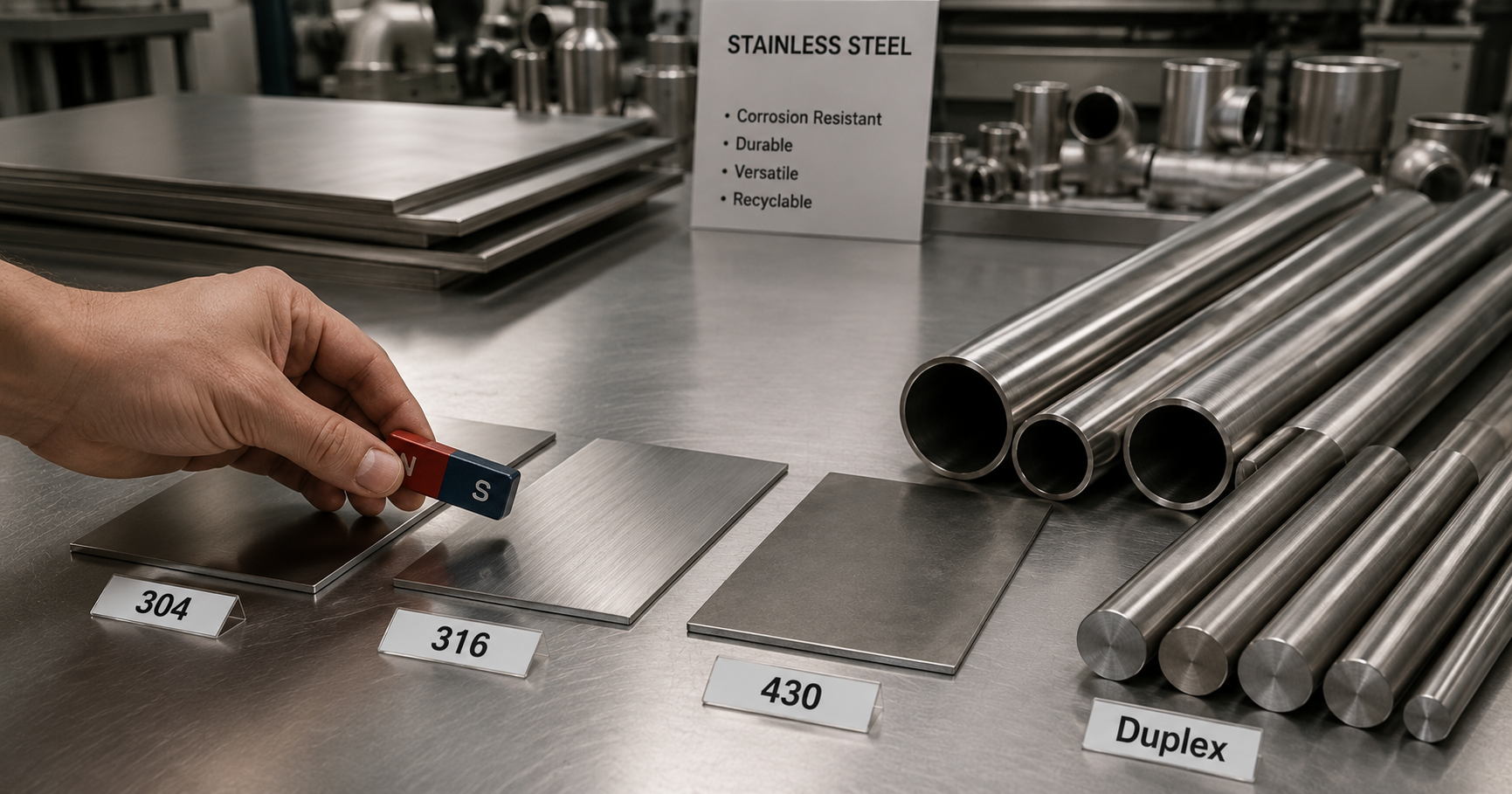
Stainless steel products can show different magnetic responses, but a magnet check alone cannot confirm a material grade, quality level, or project suitability.
Can a Magnet Confirm a Stainless Steel Grade?
No. A magnet can show only how a particular item responds during a field check. It cannot by itself confirm the stated grade, chemical composition, quality level, compliance, or suitability for a specific service environment.
For industrial purchasing, a magnet check should not become the acceptance rule. Different product forms, material conditions, manufacturing histories, and field-check methods can affect the response that a buyer observes. The purchase specification and the agreed verification route remain the reference point.
What Should Buyers Check for 304, 316, 430, or Duplex Stainless Steel?
These grade names are often searched together with “magnetic.” The useful procurement question is not only whether a magnet responds; it is what the project actually requires and how that requirement will be checked.
| When the inquiry mentions | Confirm before approval | Do not use as final proof |
|---|---|---|
| 304 or 316 | Specified grade, product form, condition, dimensions, tolerance, standard, and required documents. | A single magnet response. |
| 430 | Project specification, intended application, surface or delivery condition, and acceptance method. | Appearance or magnetic response alone. |
| Duplex stainless steel | Exact grade designation, project standard, product form, application, and any required verification method. | A field magnet check as a substitute for the specification. |
Why Can Stainless Steel Products Respond Differently to a Magnet?
Magnetic response can vary with the grade designation, product condition, manufacturing history, and the way a field check is performed. This is why two items described in a similar way may not show an identical response during a quick check.
That variation does not, by itself, identify the grade or decide whether the material is acceptable for service. If the project has a strict magnetic, permeability, testing, or documentation requirement, write that requirement into the purchase specification and agree the verification method before the order is confirmed.
How Should an Industrial Buyer Verify the Requirement?
The buyer and supplier should first agree what needs to be verified. The correct route depends on the project, the product form, the applicable standard, and the level of risk involved. Do not assume that one document or one field test is sufficient for every order.
- State the required stainless steel grade and applicable standard.
- State the product form: sheet, plate, coil, pipe, tube, bar, or another form.
- State dimensions, tolerance, surface or delivery condition, and quantity.
- State any required documents, marking, traceability, or project-specific inspection method.
- State the application and destination so the requirement can be reviewed in context.
For relevant product categories, buyers can review stainless steel materials, stainless steel plate, and stainless steel coil.
Common Mistakes When Using a Magnet
“If it is magnetic, it cannot be the stated stainless steel.”
This is not a reliable acceptance rule. Magnetic response alone does not identify the exact grade or confirm whether the supplied material meets the project specification.
“If it is not magnetic, it must be 304 or 316.”
This is also not a reliable identification method. A magnet does not replace specification review, agreed documentation, or any project-required verification.
“A magnet tells me the corrosion performance.”
No. Magnetic response should not be used to decide corrosion suitability. Grade selection must be based on the project environment and the applicable specification.
What Should You Include in an RFQ?
A clear inquiry reduces the risk of treating a magnet check as a substitute for material confirmation. Include the information below so the requirement can be reviewed manually.
- Requested grade and applicable standard
- Product form, dimensions, tolerance, and surface or delivery condition
- Quantity, packing requirements, application, and destination
- Required documents, traceability, inspection, or testing method, if the project specifies them
Contact Us to Discuss Your Requirement
Please send the requested grade, product form, dimensions and tolerance, applicable standard, surface or delivery condition, quantity, document requirements, application, and destination. We will review the requirement manually; a magnet check is not a substitute for project-specific verification.
Contact Us to Discuss Your Requirement
Email: [email protected]
Frequently Asked Questions
Is 304 stainless steel magnetic?
Magnetic response can vary with product condition and manufacturing history. A magnet check alone cannot confirm whether a product meets a 304 requirement; confirm the specification and verification route for the order.
Is 316 stainless steel magnetic?
A magnet response alone cannot confirm a 316 requirement. Review the requested grade, product condition, standard, and any project-required documents or inspection method.
Is 430 stainless steel magnetic?
Do not use a magnet as the final acceptance method for a 430 requirement. Use the project specification and agreed verification route.
Is duplex stainless steel magnetic?
For duplex stainless steel, confirm the exact grade designation and the project requirement. A field magnet check does not prove grade identity or service suitability.
Can a magnet tell the difference between 304 and 316?
No. A magnet test alone cannot reliably distinguish grades. Buyers should agree the appropriate project-specific verification route before approving material.